












Oklahoma Premises Liability Attorneys
When a property owner’s failure becomes your injury.
A slip, trip, or fall on someone else’s property can produce some of the most serious injuries personal injury law sees — broken hips, head injuries, spinal damage, and permanent reductions in mobility. If your fall happened because someone failed to maintain their property reasonably, the law is on your side.
Careless property owners count on you doubting whether your case is real.
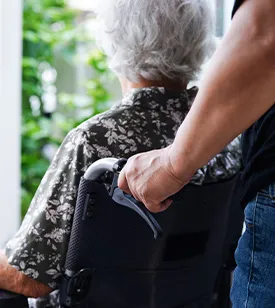
A slip, trip, or fall on someone else’s property can produce some of the most serious injuries personal injury law sees: broken hips, head injuries, spinal damage, and permanent reductions in mobility — often for older adults whose recovery is hardest.
And yet of all the personal injury cases that come through our doors, slip and fall is the one prospective clients are most likely to hesitate about. They wonder if their case is real. They wonder if they will be seen as opportunistic. They blame themselves before anyone else does.
That hesitation is exactly what property owners and their insurers count on. Most slip and fall cases settle for far less than they should — or never get filed at all — because injured people walk away embarrassed instead of represented. If your fall happened because someone failed to maintain their property reasonably, the law is on your side. The question is whether you have someone who knows how to use it.
Most premises liability cases trace back to a hazard someone knew about — or should have.
The scenarios below account for the majority of premises liability claims in Oklahoma. The legal question is rarely whether you fell — it is whether the property owner had a reasonable opportunity to prevent the hazard and didn’t take it.
Spills, Wet Floors & Slick Surfaces
The classic grocery store, restaurant, or retail spill that wasn’t cleaned up — and wasn’t marked. Liability often turns on how long the hazard had been there before your fall.
Ice & Snow on Walkways
Untreated sidewalks, parking lots, and entry areas at apartment complexes, businesses, and commercial properties. Property owners cannot ignore weather they had every reason to expect.
Broken or Uneven Stairs
Loose handrails, cracked treads, missing risers, and stairs that don’t meet code. Stairway falls produce some of the most severe injuries we see.
Inadequate Lighting
Parking lots, stairwells, hallways, and walkways too dark to see clearly. The hazard you couldn’t see is the hazard the property owner is responsible for illuminating.
Uneven Flooring & Trip Hazards
Cracked tile, lifted carpet, transition strips, raised concrete, and unmarked floor changes. A half-inch difference at the wrong moment can break a hip or worse.
Falling Merchandise & Stacked Goods
Items improperly stacked on warehouse-style retail shelves, falling and striking customers below. Big-box retailers are aware of the risk and frequently fail to manage it.
Parking Lot Defects
Potholes, broken curbs, missing wheel stops, and unmarked level changes. Parking lot falls are common and frequently severe — and the property owner usually knew about the hazard.
Pool & Water Hazards
Slippery pool decks, missing safety equipment, and unsecured pool areas — particularly when children are involved, where Oklahoma’s attractive nuisance doctrine raises the standard.
If you fell on a hazard that had been there for hours — or for days — and no one at the property addressed it, that is not bad luck. It is the legal definition of negligence.
Oklahoma law sets different standards depending on why you were on the property.
One of the first questions any premises liability case has to answer is what duty the property owner owed you. Oklahoma sorts visitors into categories — and the level of protection you receive depends on which category fits.
Invitees
Customers & business visitors
Shoppers, restaurant patrons, hotel guests, delivery drivers. You are owed the highest level of protection: the property owner has an affirmative duty to inspect for hazards and either correct or warn of them.
Licensees
Social guests
Friends and family visiting a private home. Property owners have a duty to warn of known dangers a reasonable guest wouldn’t otherwise discover.
Children
Special protection
Oklahoma’s attractive nuisance doctrine raises the duty of care when foreseeable children are at risk — pools, equipment, construction sites, and other features that draw kids who don’t understand danger.
Trespassers
With important exceptions
Generally limited duty, with exceptions for willful or wanton conduct by the owner, and heightened duties when children are involved. Even here, an experienced attorney can identify when liability still attaches.
Property owners and their insurers use the same defenses over and over. We know how to defeat them.
Slip and fall defendants almost never simply concede liability. Their insurers and defense attorneys deploy a familiar set of arguments designed to either deny the claim outright or push your share of fault above 50%, where Oklahoma law bars any recovery at all. Recognizing these defenses is the first step in answering them.
“It was open and obvious.”
Oklahoma’s most common slip-and-fall defense. But the doctrine is not absolute — courts recognize exceptions when the hazard was unavoidable, when distraction was foreseeable, when lighting was inadequate, or when the injury was reasonably foreseeable to the owner.
“We didn’t know about the hazard.”
The notice defense. Liability requires actual notice (they knew) or constructive notice (the hazard had been there long enough that they should have known). Surveillance footage, maintenance logs, and inspection records often defeat this argument.
“You weren’t paying attention.”
An attempt to shift blame under Oklahoma’s comparative negligence rule. If they convince a jury you were more than 50% at fault, you recover nothing — every percentage point matters.
“Other customers were fine.”
The argument that because no one else fell, you must have been the problem. Courts recognize this for what it is: a deflection from the owner’s duty, not a defense to it.
“The hazard was just reported.”
Property owners often claim they had no opportunity to fix the hazard. Maintenance logs, employee statements, and prior complaints frequently tell a different story.
“You assumed the risk.”
A defense more commonly raised than supported. True assumption of risk requires actual knowledge of the specific danger and a voluntary choice to encounter it — not simply walking through a store.
If you fell because of a hazard someone else should have fixed — the steps that protect your case.
Get medical attention promptly, document what you can, and protect the evidence. Then, before you give a recorded statement or accept any offer, talk to a lawyer.
Get medical attention promptly.
See a physician right away, even if you think the injury is minor. Adrenaline masks pain — and gaps in the medical record become the carrier’s argument that you were not really hurt.
Photograph the scene.
If you can, take pictures of the hazard, the surrounding area, and any conditions that contributed — wet floor without a sign, poor lighting, broken stair tread. Photographs taken that day are powerful evidence.
Get the names of witnesses.
Other shoppers, employees, or anyone who saw the fall or the hazard before it. Witness memories fade and contact information disappears — get it while you can.
Report the fall to the property.
Ask for an incident report and request a copy. Stick to the facts of what happened. Do not speculate, apologize, or accept blame — those statements will be used against you.
Do not give a recorded statement.
Before you speak to the property owner’s insurance carrier, talk to a lawyer. Recorded statements are routinely used to pin fault on the injured person and limit what is paid.
Call before signing anything.
The first conversation costs you nothing. Surveillance footage is often retained for only 30 days — what you do, and don’t do, in the first weeks can determine whether the evidence still exists when it matters.
There is a remedy. There is also a clock.
Oklahoma’s statute of limitations gives you two years from the date of injury to file most premises liability claims. But practical deadlines are much shorter than the statute — surveillance footage is routinely retained for only 30 days, and incident reports, maintenance logs, and inspection records can disappear from company files just as quickly. Cases involving government property require formal notice in as little as 90 days. If you think you may have a case, the answer is to call, not to wait.

Preserve the evidence. Defeat the standard defenses. Recover what your injuries actually cost.
Slip and fall cases are won by attorneys who move quickly to lock down the evidence the property owner controls — and who know how to dismantle the open-and-obvious, no-notice, and comparative-fault defenses that come up in every case.
-
Move fast on surveillance and recordsWe send preservation demands the day we are retained — surveillance footage, maintenance logs, prior-incident records, and inspection reports — before any of it can be overwritten or ‘lost.’
-
Build the notice case the carrier insists isn’t thereConstructive notice is proven with timestamps, employee testimony, and prior complaints. We know where to look and what to ask for in discovery.
-
Counter the open-and-obvious defenseWe document the conditions — lighting, distractions, layout, foreseeability — that bring the case within the recognized exceptions to Oklahoma’s most common defense.
-
No fee unless we recoverFree, confidential consultation. We handle these cases on contingency — you pay nothing unless we recover compensation for you.
Your instinct to act on this matters. So does timing.
Tell us what happened. We will review the situation, explain your options in plain language, and tell you whether there is a case to pursue. There is no fee to talk to us, and no fee unless we recover for you.
Request a Free Case Review
All consultations are confidential. Response within one business day.