













"Accident" Is a Four-Letter Word: Why We Don't Use It In Personal Injury Cases
There's a word insurance companies love: “accident”. Allstate initiated a program called “Accident forgiveness,” enticing people
We call them crashes. Collisions. Wrecks. Incidents. We choose our words deliberately, and there's a reason for it that goes beyond style — it's about how one word can quietly shape the way a claim, a jury, and even you as the injured person think about what happened.
What the word "Accident" Actually Implies
Humor me for a moment and say the word "accident" out loud. What immediately comes to mind? Spilled milk. An overlooked bill that is late. A stubbed toe. A rainy day that ruined a picnic. Typically, when people hear the word “accident” something that just happens immediately comes to mind – not someone who may have messed up.
Now think about what actually happens in a typical crash:
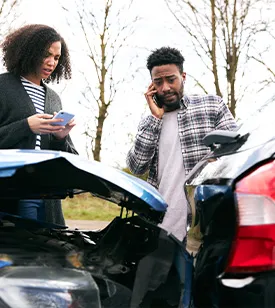
A driver who ran a red light because they were looking at their phone.
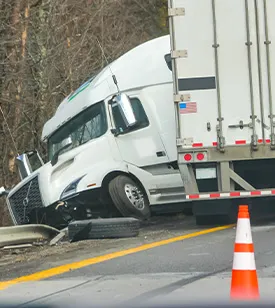
A trucking company that skipped a maintenance inspection, which led to a tire coming off and crashing into another vehicle.
Crashes typically occur because someone – not something – failed to do or not do a certain thing that would have prevented the crash. When someone is distracted and causes a collision, or fails to perform a maintenance inspection that leads to a crash, those actions or omissions are not "an accident" in the way we use the word in everyday conversation. Instead, they are the predictable result of someone's choice — to speed, to skip a repair, to look away from the road for four seconds.
That's not semantics. It's the entire legal and human question your case turns on: “was this preventable, and who could have prevented it?”
This Isn't Just Our Opinion — It's a Documented Shift
We're far from the only ones who've noticed this. Highway safety researchers, journalists, and government agencies have spent years pushing to retire the word "accident" for exactly this reason.
The National Highway Traffic Safety Administration launched a campaign in 1997 explaining that crashes are predictable, preventable events, and that continuing to call them "accidents" reinforces the idea that they're outside human control, when in reality they're the traceable result of specific decisions. Nearly two decades later, the Associated Press updated its own stylebook to steer journalists away from the word "accident" when covering car crashes, recommending "crash," "collision," or similar terms instead — at least until fault has actually been determined.
Advocacy groups like Transportation Alternatives and Families for Safe Streets have organized "Crash Not Accident" campaigns around the same idea: calling a crash an accident already assumes the answer to the question that should still be open. Some U.S. police departments — including in New York City and San Francisco — have gone as far as removing the word "accident" from their own official crash reports.
Even the history of the word is worth knowing. During the Industrial Revolution, factory owners and early automakers found "accident" to be a convenient word — workplace injuries and pedestrian collisions described as "accidents" made it easier to avoid responsibility for unsafe equipment, unsafe conditions, and unsafe streets. The word did real work for the people who didn't want to pay for the harm they caused. It still does.
Why Insurance Companies Keep Using It
This is where it gets personal to your claim. Insurance adjusters are trained communicators, and language is one of their primary tools. When an adjuster refers to your crash as "the accident" on a phone call, in a letter, or in a settlement offer, it isn't neutral or careless word choice — it's a subtle framing device.
Calling it an "accident" nudges everyone in the conversation — including you — toward thinking of it as bad luck rather than a preventable event someone caused. It's a small linguistic move that can make a driver's choice to run a stop sign feel like an act of God rather than negligence. It softens the responsibility of the at-fault party before liability has even been discussed. And it can subtly influence how much you think your claim is "worth," because bad luck doesn't feel like something anyone owes you for — but someone else's carelessness does.
None of this means every adjuster is acting in bad faith by using the word. Plenty of people use "accident" out of habit — it's the word most of us grew up using. But habit or strategy, the effect is the same: it minimizes.
Why the Words We Use Matter to Your Case
Here's the practical version, from the perspective of your case: how a crash gets described early on — in a police report, an insurance file, or even casual conversation — can shape assumptions about fault before all the facts are even in. Oklahoma law asks a very specific question in a personal injury claim: did someone breach a duty of care, and did that breach cause your injuries? That question has nothing to do with intent, and nothing to do with luck. It's about whether a reasonably careful person would have acted differently.
That's why, throughout your case, you'll notice we describe what happened to you as a crash, a collision, or a wreck — not "an accident." It's a small habit with a real purpose: keeping the focus where it belongs, on what caused your injuries and who is responsible for them, rather than letting a loaded word decide that question before we've even started.
A Word About This Post
This post is for general education and isn't legal advice about any specific situation. If you've been hurt in a crash and have questions about your rights, our team is happy to talk with you about the specific facts of your case.
Sources.
National Highway Traffic Safety Administration, "Crashes Aren't Accidents" campaign (1997), as discussed in Steven Gursten, "Crash, Not Accident", Michigan Legal Examiner.
Associated Press Stylebook revision (2016), as discussed in the Michigan Department of Transportation's "Crash Not Accident" initiative page.
Transportation Alternatives and Families for Safe Streets, "#CrashNotAccident" campaign (launched 2015); see also We Save Lives, "Drop the A Word" petition.
New York City and San Francisco police department reporting policy changes (2013 onward), as discussed in "Crash Not Accident: Why You Should Drop the 'A' Word".